Community-Led Land Restoration & Water Security
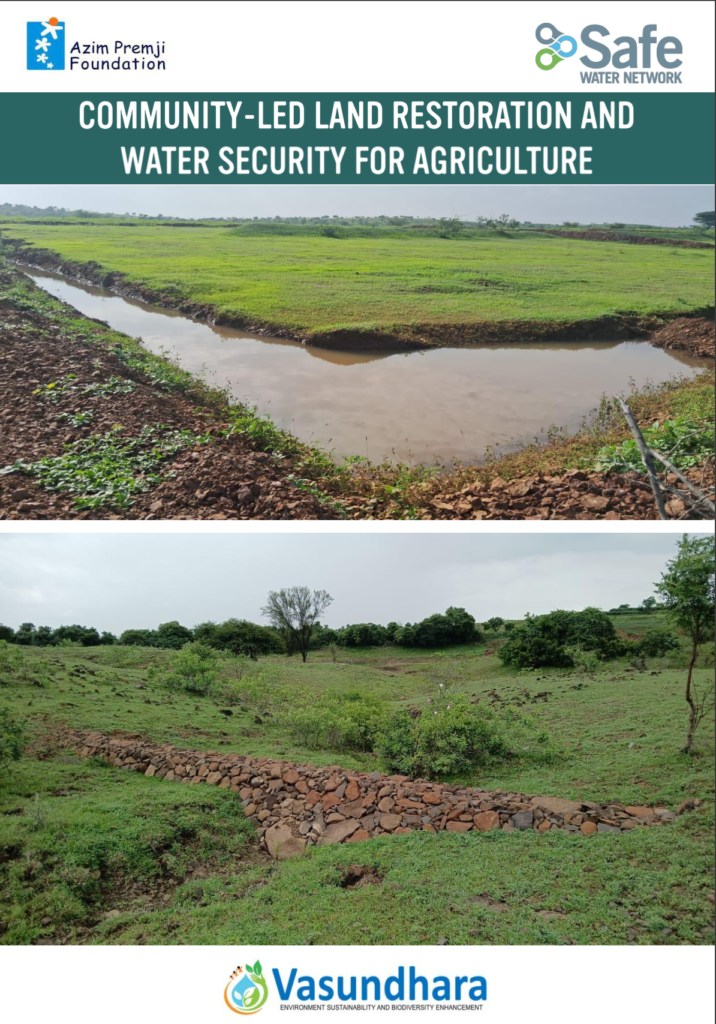
This compendium showcases Safe Water Network India’s community-led Integrated Water Resource Management (IWRM) initiative across six villages in Karmala Block, Solapur. Supported by the Azim Premji Foundation, the program demonstrates how watershed restoration, water security, climate-resilient agriculture, women’s empowerment, and institutional strengthening can transform drought-prone landscapes into resilient and sustainable rural communities. Through innovative conservation measures, participatory planning, and livelihood enhancement, the initiative presents a scalable model for integrated natural resource management and rural development.
ENVIRONMENTAL SUSTAINABILITY AND BIODIVERSITY ENHANCEMENT
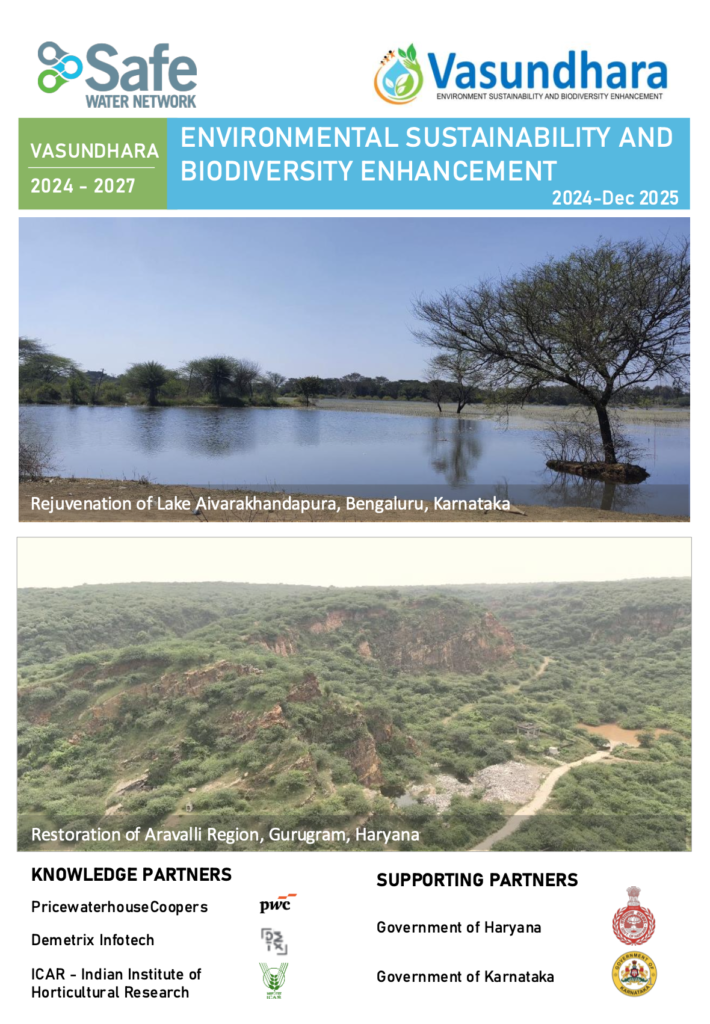
Program Vasundhara is Safe Water Network India’s flagship environmental sustainability initiative that restores degraded landscapes, rejuvenates water bodies, enhances biodiversity, and strengthens climate resilience across Haryana and Karnataka. Through community-led conservation, sustainable agriculture, clean energy, ecological restoration, and institutional capacity building, the program demonstrates an integrated model for creating healthier ecosystems, resilient communities, and sustainable rural and peri-urban landscapes.
Natural Resource Conservation
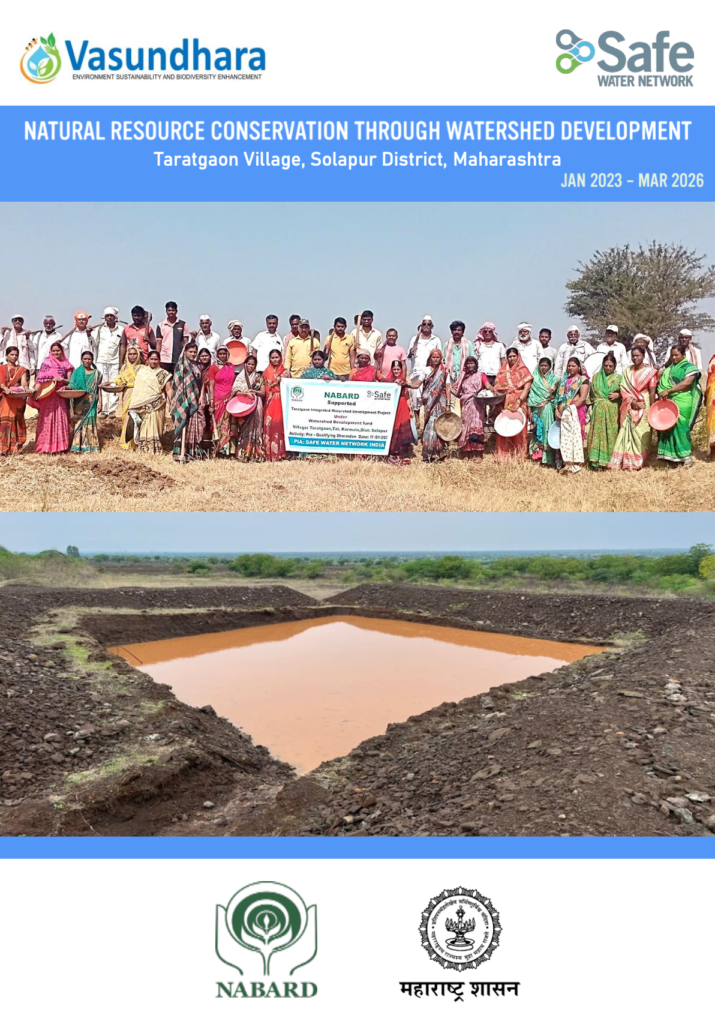
This compendium documents the transformative watershed development journey of Taratgaon Village in Karmala Block, Solapur District, Maharashtra—a drought-prone rain-shadow region facing recurring water scarcity, low agricultural productivity, and livelihood challenges. Implemented by Safe Water Network India (SWNI) with support from NABARD under the Watershed Development Fund (WDF) – Full Implementation Phase (FIP), the four-year (2023–2027) initiative showcases a community-led approach to soil and water conservation, groundwater recharge, climate-resilient agriculture, and institutional strengthening. The compendium captures key interventions, outcomes, lessons learned, and best practices that demonstrate how integrated watershed management can enhance water security, improve rural livelihoods, and build resilient communities.
Water Budgeting Tool for Watershed
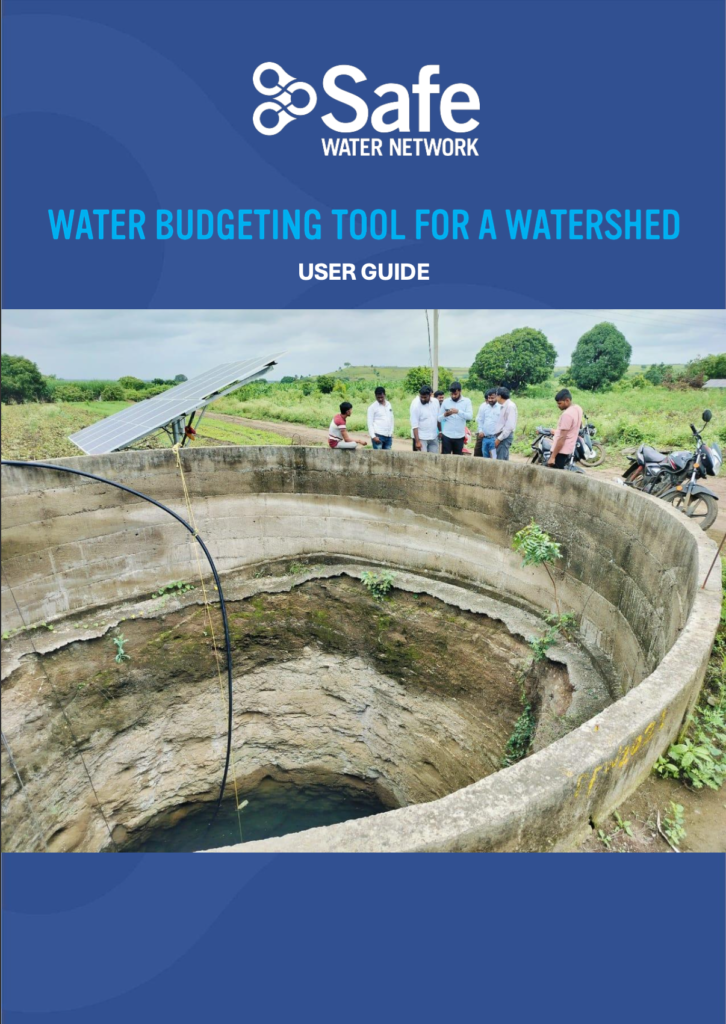
The Water Budgeting Tool for Watersheds is a practical guide developed by Safe Water Network India to help communities, practitioners, and local institutions assess water availability, estimate water demand, and prepare village-level water budgets. By integrating rainfall, groundwater, surface water, domestic, livestock, and agricultural water requirements, the tool enables informed crop planning, sustainable groundwater management, and climate-resilient decision-making. It also provides standardized methodologies, data collection formats, calculation frameworks, and a real-world case study demonstrating how water budgeting can strengthen water security and support resilient rural livelihoods.
Annual Report – Safe Water Network India (2024-25)
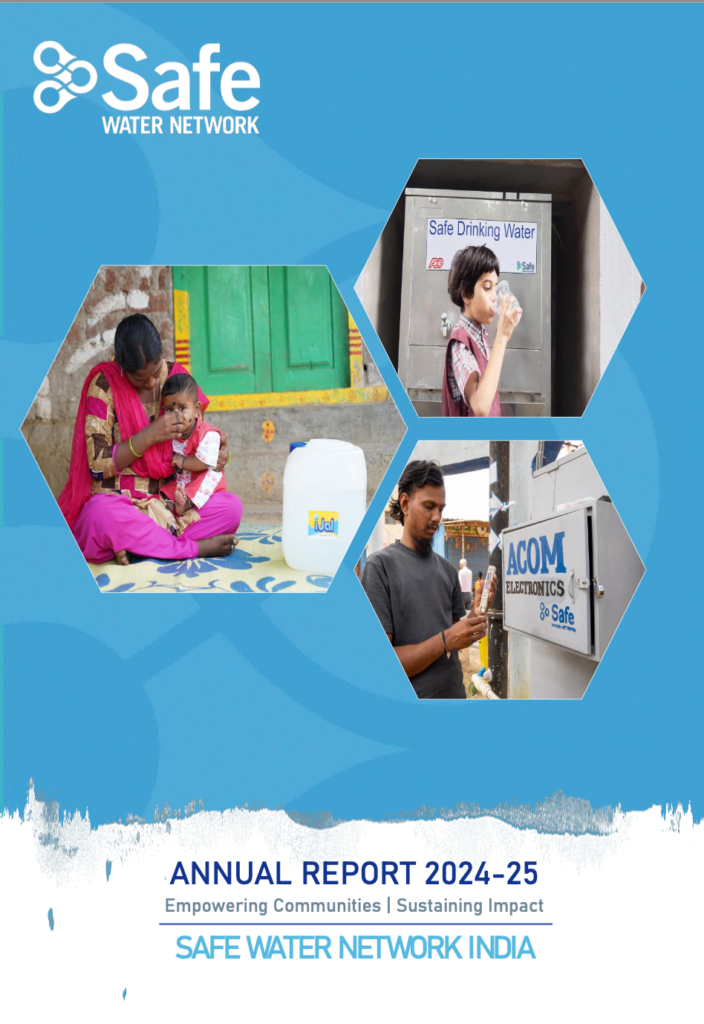
The report demonstrates Safe Water Network India’s integrated approach in 2024-25 to scaling solutions, ensuring sustainability, and fostering community resilience through access to safe water. It provides a comprehensive overview of the organization’s progress, impact, and plans for advancing access to safe and affordable water in underserved communities.
Annual Report – Safe Water Network India (2023-24)

The report demonstrates Safe Water Network India’s integrated approach to scaling solutions, ensuring sustainability, and fostering community resilience through access to safe water. It provides a comprehensive overview of the organization’s progress, impact, and plans for advancing access to safe and affordable water in underserved communities.
Community-led Restoration and Rejuvenation of Pond Teekli, Gurugram, Haryana

The Case Study describes the rejuvenation of Bajghera Pond in Gurugram, once polluted and neglected, through a community-led rejuvenation initiative. The project restored water storage (6000 m3), strengthened groundwater recharge (12,000 m3 potential) and created green public space. With strong community ownership and Panchayat support, the intervention enhances water security, biodiversity and climate resilience in line with national and global goals.
Annual Report – Safe Water Network India (2022-23)
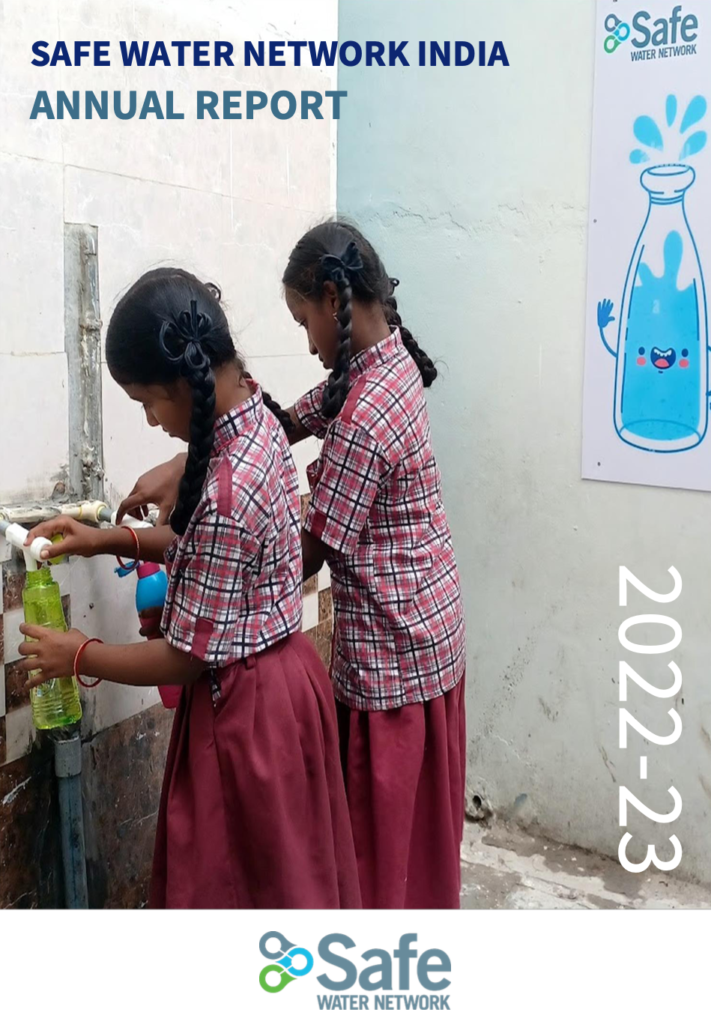
This report covers Safe Water Network India’s 2022 and early 2023 activities. At the start of the report, the management reflects on the current challenges facing the scale of Safe Water Enterprises and the role of Safe Water Network India in helping address these challenges and paving the way for their sustainability.
RELOCATION of iJal STATIONS for ASSET PROTECTION
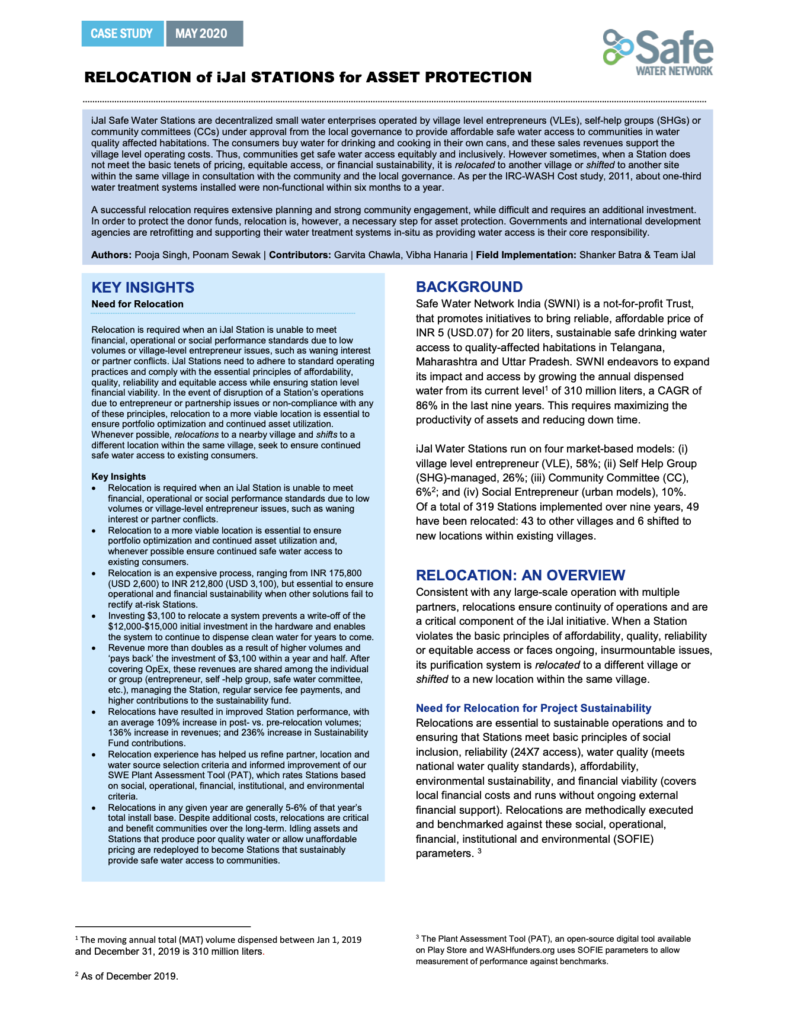
This case study highlights Safe Water Network India’s innovative approach to relocating iJal Safe Water Stations to protect assets and ensure sustainable access to safe drinking water. By relocating underperforming stations to more viable locations, the initiative improves operational efficiency, financial sustainability, and community access while maximizing the long-term value of donor investments. The study also shares key lessons and real-world examples that demonstrate the effectiveness of strategic asset management.
Community-led Restoration and Rejuvenation of Pond Teekli, Gurugram, Haryana
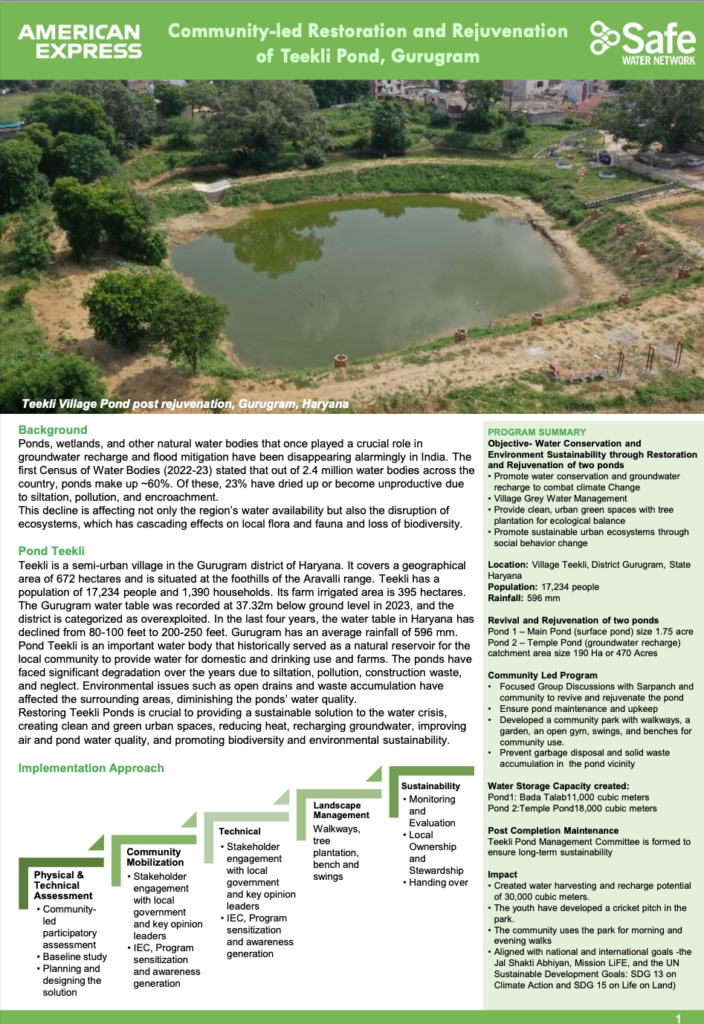
The Case Study describes the restoration of two degraded water bodies, increasing storage to 29,000 m3, and raising the water table by 3 meters. Ecological health improved through native tree planting and invasive species removal, while the site was transformed into a community park with recreational facilities. A local pond management committee ensures long-term sustainability.